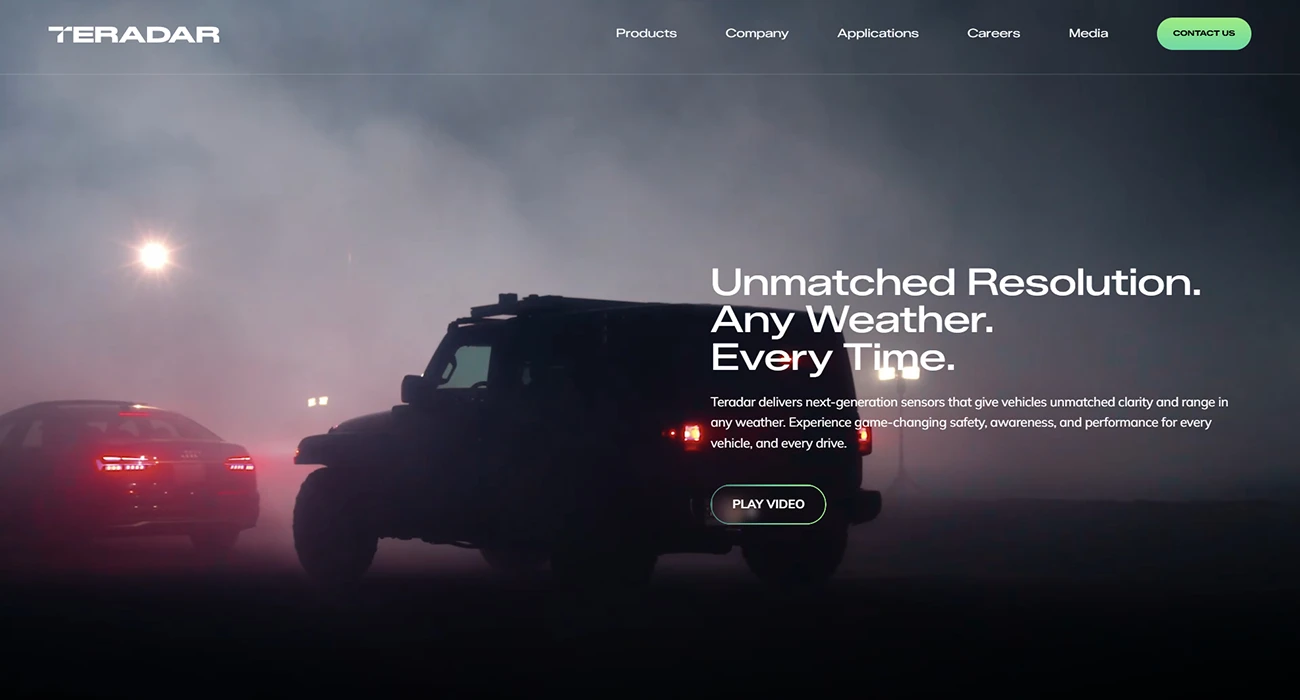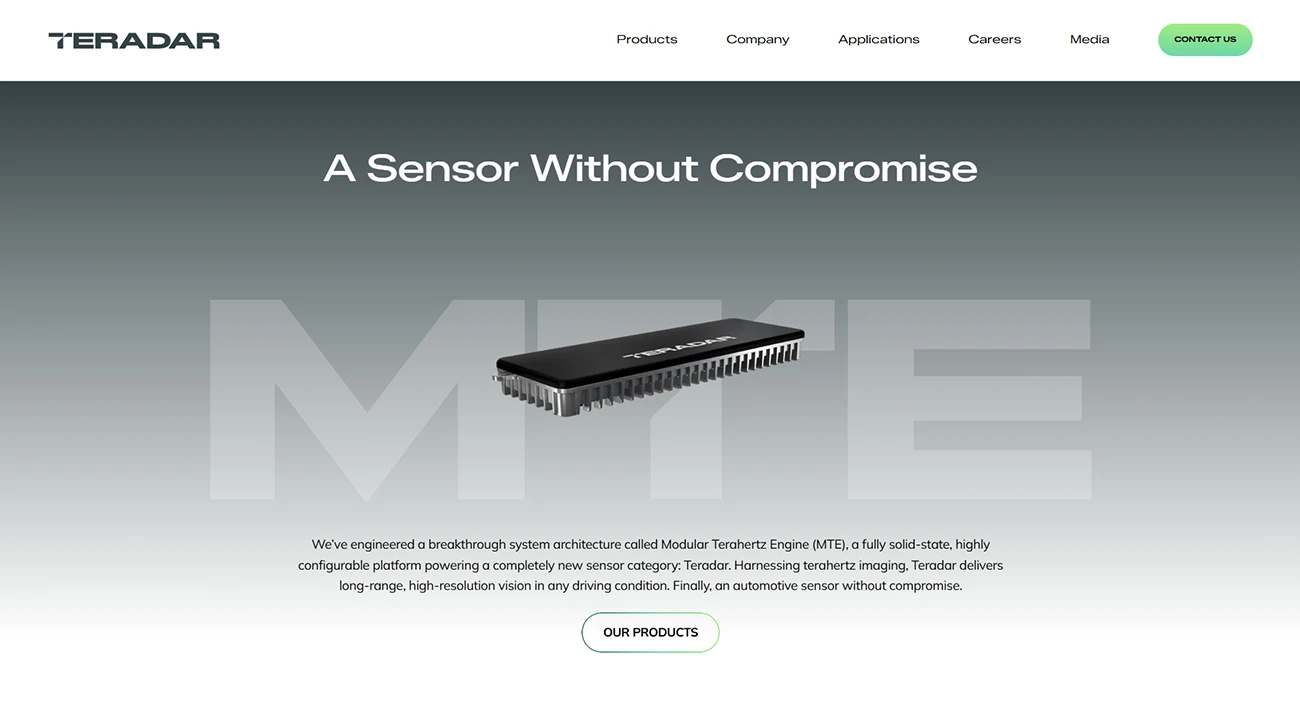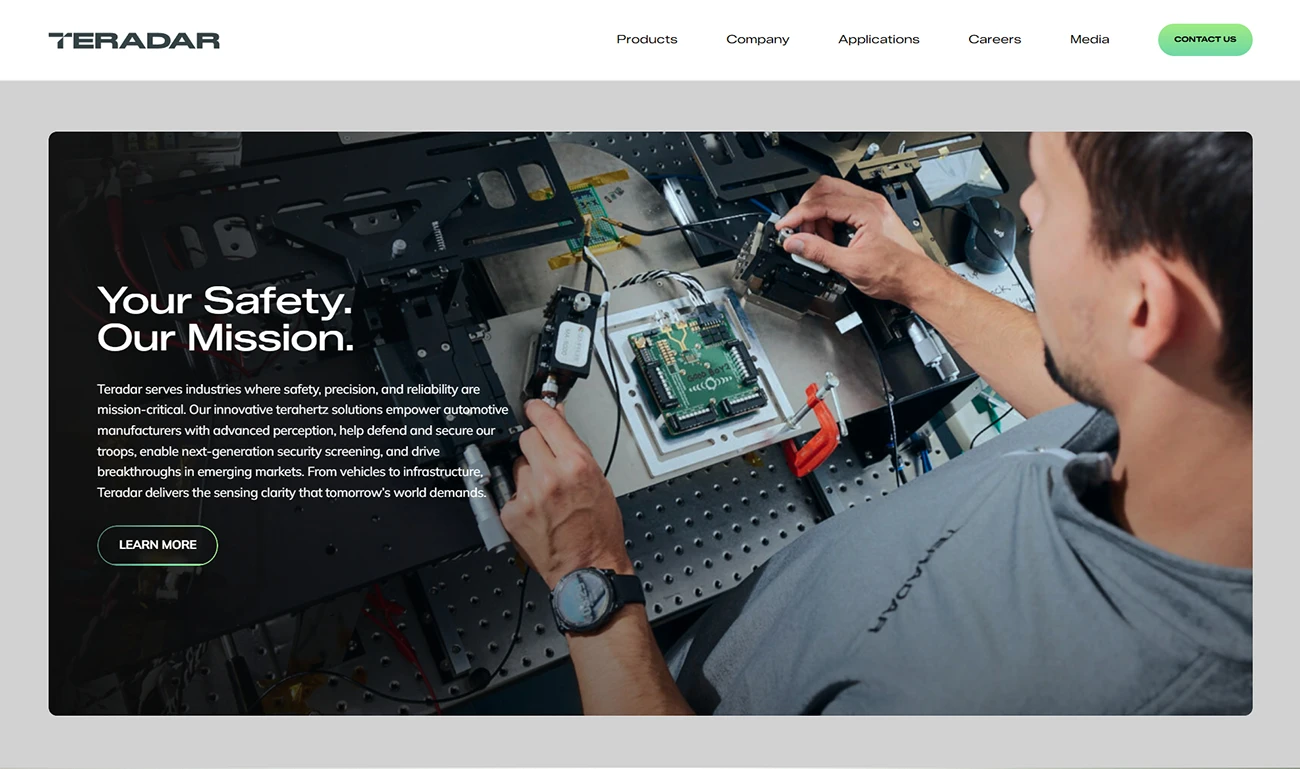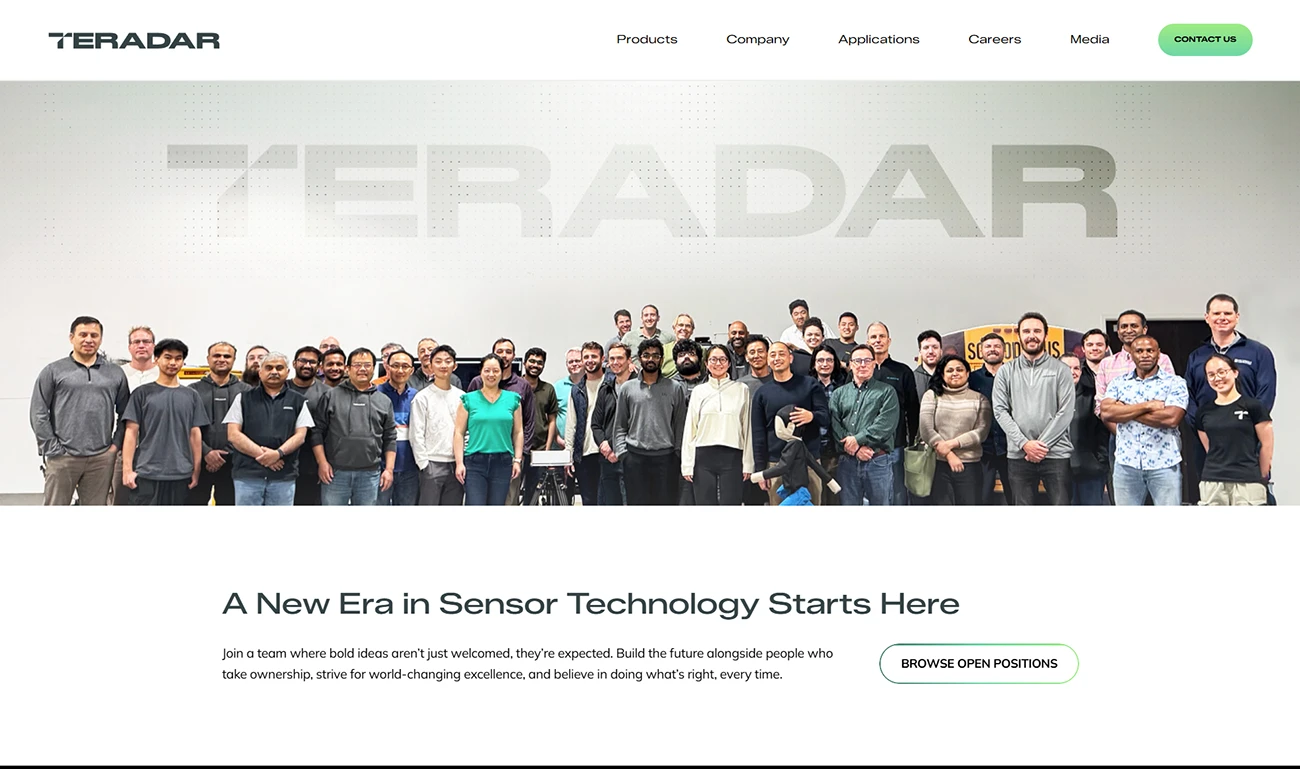
The Teradar.com website was designed to serve a dual purpose: to communicate breakthrough technology with clarity and confidence, and to establish Teradar as the authoritative voice in an emerging category it created.
Key design and UX decisions worth noting for judges: Visual Language — The “Visualizer” design system translates raw sensor data into brand-native storytelling.
The safety spectrum color gradient communicates real-world spatial awareness intuitively, making complex sensor output instantly accessible to non-technical visitors.
Typography — Staff Wide Medium headlines are used with deliberate right-alignment in key moments, giving the layout a distinctive sense of forward motion that mirrors the automotive context.
Space Mono is reserved for data labels and numerical callouts, lending technical credibility without losing warmth. Audience Architecture — The site is structured to serve three distinct audiences — automotive OEMs and Tier-1 suppliers, defense/government, and investors — without ever feeling fragmented. Shared conviction in the mission holds the experience together across every section. Brand Cohesion — Every digital element is drawn from the Identity Blueprint, ensuring the website is a seamless extension of the broader brand system: business cards, building signage, social channels, and merch all share the same visual grammar as the site.
The site launched in November 2025 alongside Teradar’s public debut and $150M Series B announcement, and supported the company’s CES 2026 showcase of the Teradar Summit™ — the world’s first terahertz vision sensor for automotive ADAS.